ProjectForge — Technical Program Management Platform
A local-first portfolio prototype for managing product engineering programs, industrial manufacturing projects, stage-gate execution, launch readiness, cross-functional ownership, risk, procurement visibility, file vault records, activity threads, and executive status reporting.
ProjectForge is a completed high-fidelity portfolio prototype designed to demonstrate how technical program management can be organized around realistic engineering and industrial execution workflows without implying a production-ready cloud platform.
Status
High-Fidelity Portfolio Prototype
Purpose
Technical Program Management for Engineering and Industrial Execution
Core Workflows
Portfolio • Intake • Phase Gates • Tasks • Risks • RACI • Readiness • Procurement • File Vault • Reports
Data Model
Local-first IndexedDB persistence with localStorage fallback and JSON backup/export concepts
Focus
Engineering Operations, Technical Program Management, Manufacturing Launch, Cross-Functional Execution
Overview
ProjectForge is a local-first Technical Program Management platform designed to coordinate complex engineering and industrial programs from intake through execution, risk control, launch readiness, and sustaining handoff.
The prototype centers on realistic TPM workflows including project intake and chartering, portfolio visibility, stage-gate execution, task and milestone tracking, risk management, stakeholder and RACI ownership, budget and procurement visibility, launch readiness, local file vault records, activity threads, executive reporting, and AI-assisted decision support.
Problem
Engineering and manufacturing initiatives often depend on disconnected spreadsheets, emails, shared folders, meeting notes, procurement trackers, informal status updates, and manually maintained file repositories.
That fragmentation creates gaps in accountability, launch readiness, risk visibility, stakeholder alignment, evidence control, and executive reporting.
Solution
ProjectForge centralizes technical program execution into a single command center where stakeholders can track a portfolio of programs, intake new charters, manage stage gates, assign tasks, log risks, monitor readiness, review procurement exposure, register project files, publish coordination notes, generate status reports, and use decision-support insights.
The experience is positioned as a thoughtfully designed local-first product concept for technical program management rather than a generalized task app or production SaaS platform.
Key Features
Operations Command Center
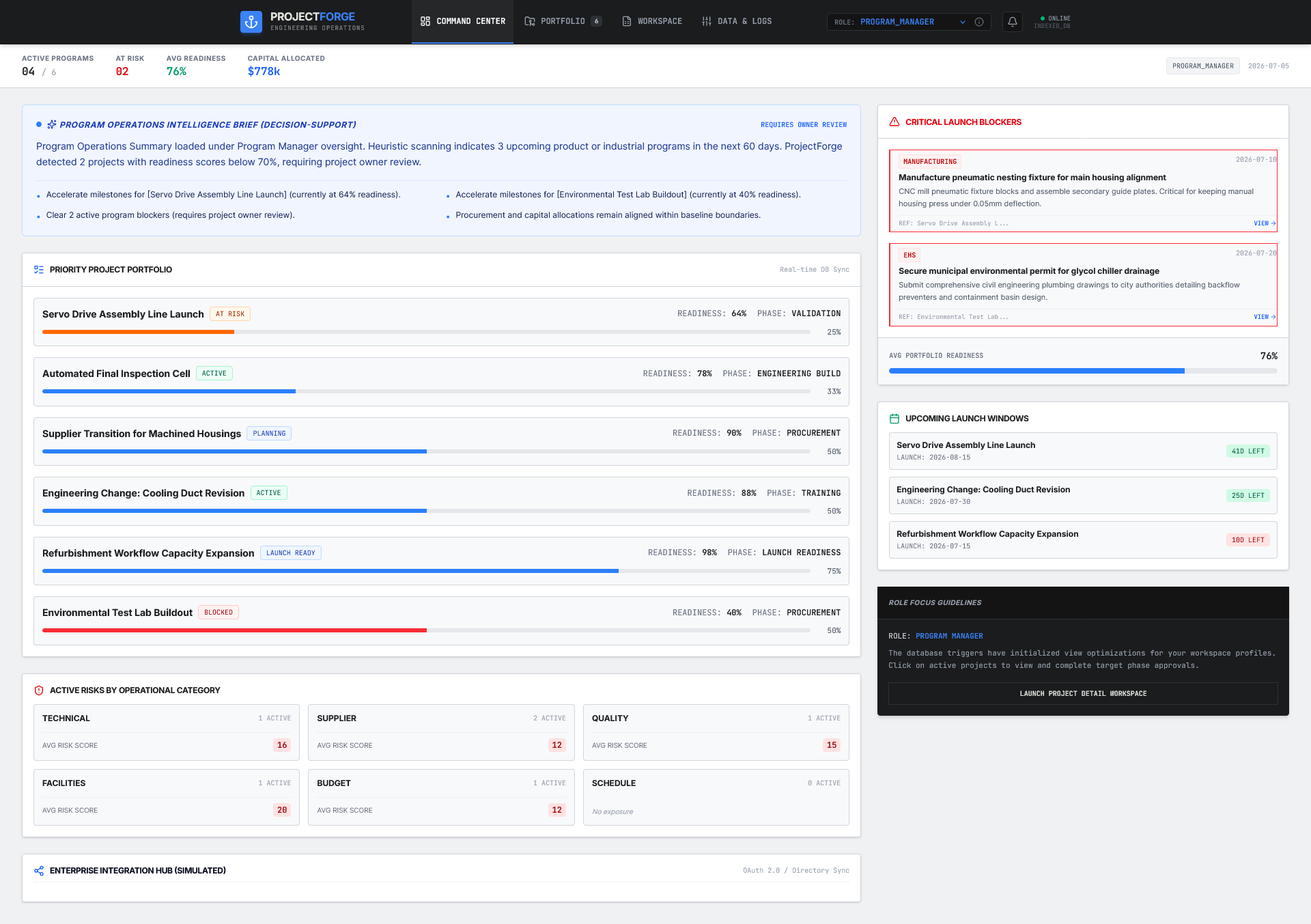
Portfolio-level command dashboard showing active programs, readiness, capital allocation, launch blockers, risk categories, and decision-support intelligence.
Project Portfolio
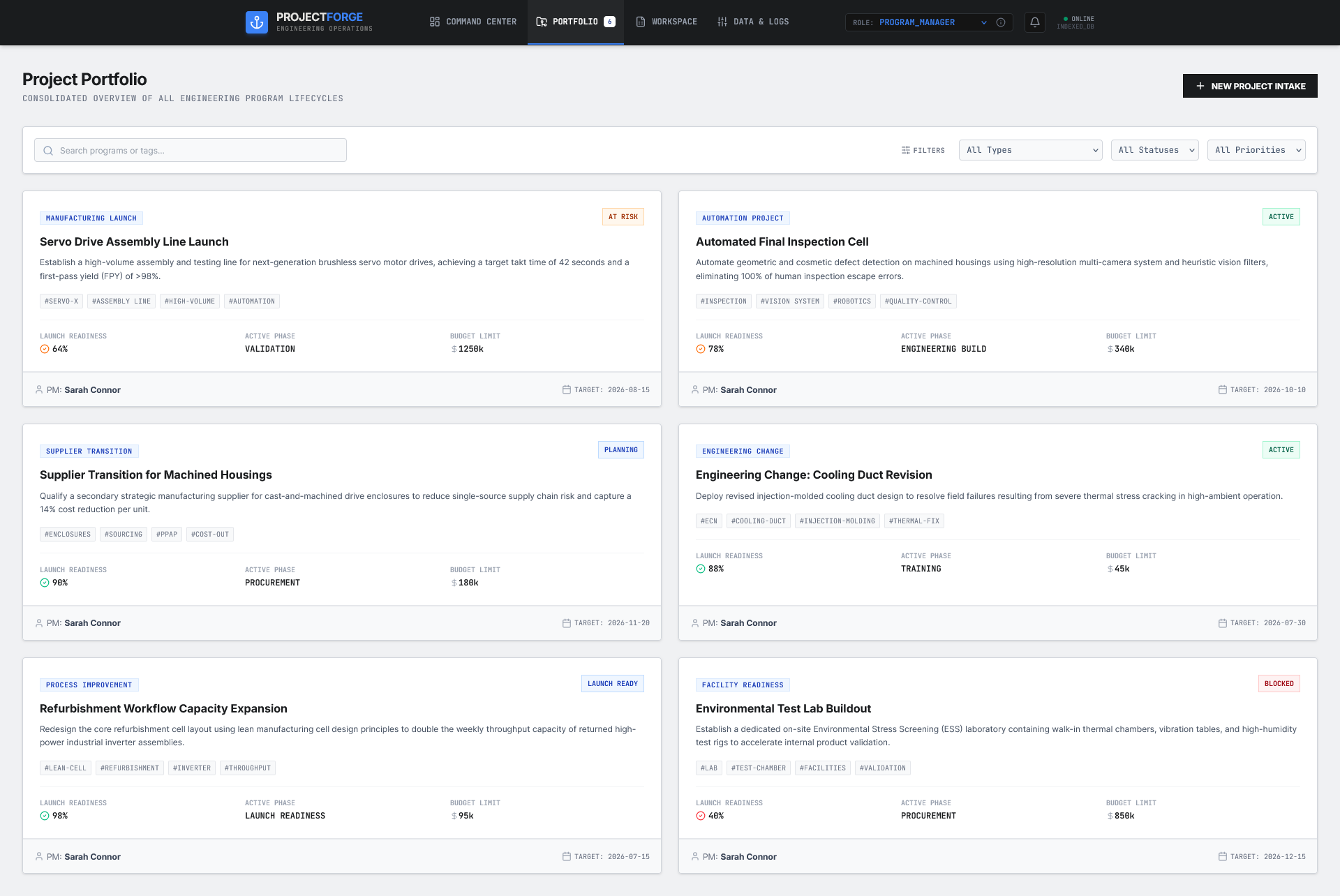
Filterable catalog of active and proposed engineering programs with readiness scores, phases, launch targets, and program ownership.
Project Intake Charter
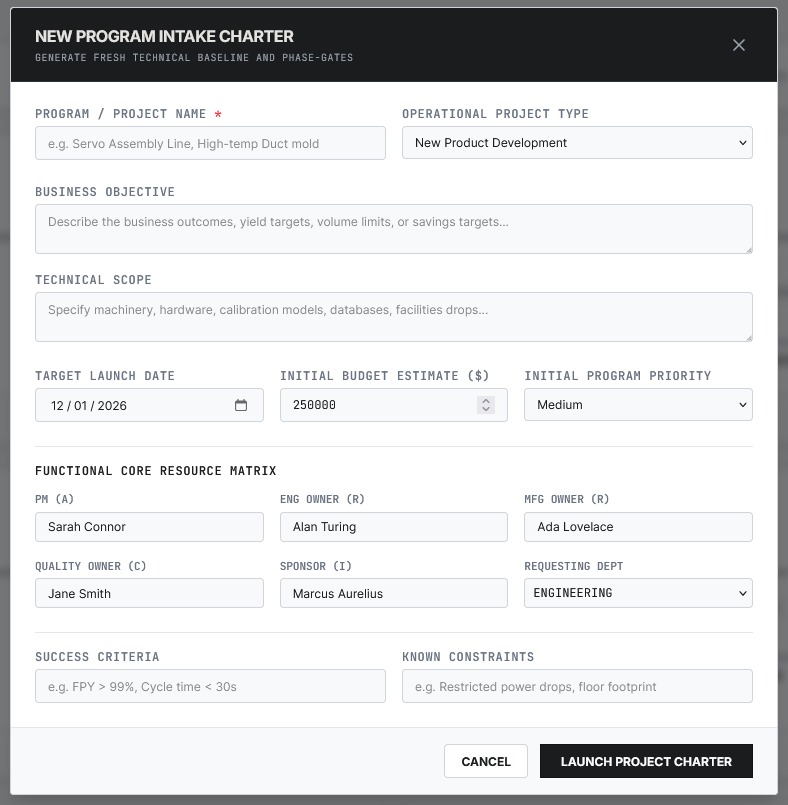
Structured intake workflow for defining business objectives, technical scope, target launch dates, budget estimates, core owners, constraints, and success criteria.
Project Workspace
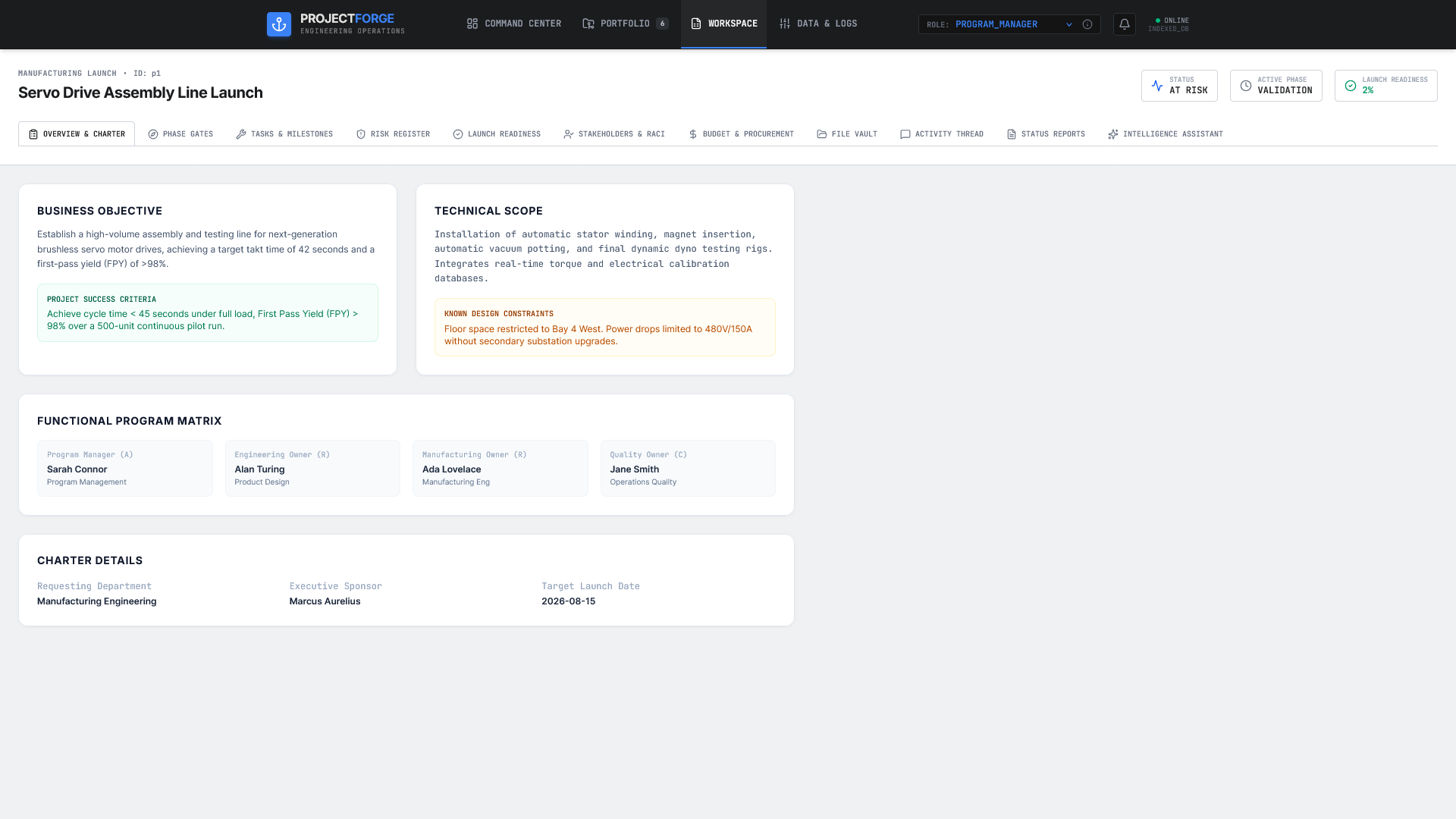
Project-level workspace that brings together scope, success criteria, constraints, owners, timeline expectations, and launch context in one place.
Stage-Gate Tracker
Ten-phase execution model covering kickoff, feasibility, concept design, engineering build, procurement, site readiness, installation, validation, pre-production, and sustaining handoff.
Tasks and Milestones
Milestone ledger and task workspace showing owners, departments, due dates, blocker flags, dependencies, and status progression.
Industrial Risk Register
Risk register with probability-impact heat map, mitigation plans, lead owners, trigger conditions, and active risk exposure.
Launch Readiness Checklist
Readiness checklist calculated from required-for-launch items, blocker penalties, evidence notes, ownership, due dates, and completion status.
Stakeholders and RACI Matrix
Responsibility matrix mapping cross-functional accountability across program management, engineering, manufacturing, quality, procurement, and executive sponsorship.
Budget and Procurement Summary
Visibility into allocated capital, committed spend, remaining reserves, long-lead items, supplier status, and delivery risk.
Local File Vault
Browser-local document repository concept for registering CAD drawings, PDFs, vendor quotes, validation records, specifications, and project evidence.
Chronological Activity Thread
Cross-functional coordination log for decision notes, blocker escalations, quality sign-offs, and program updates.
Executive Status Reports
Stakeholder-ready reporting that compiles status, launch readiness, blockers, risk exposure, budget notes, accomplishments, and next actions.
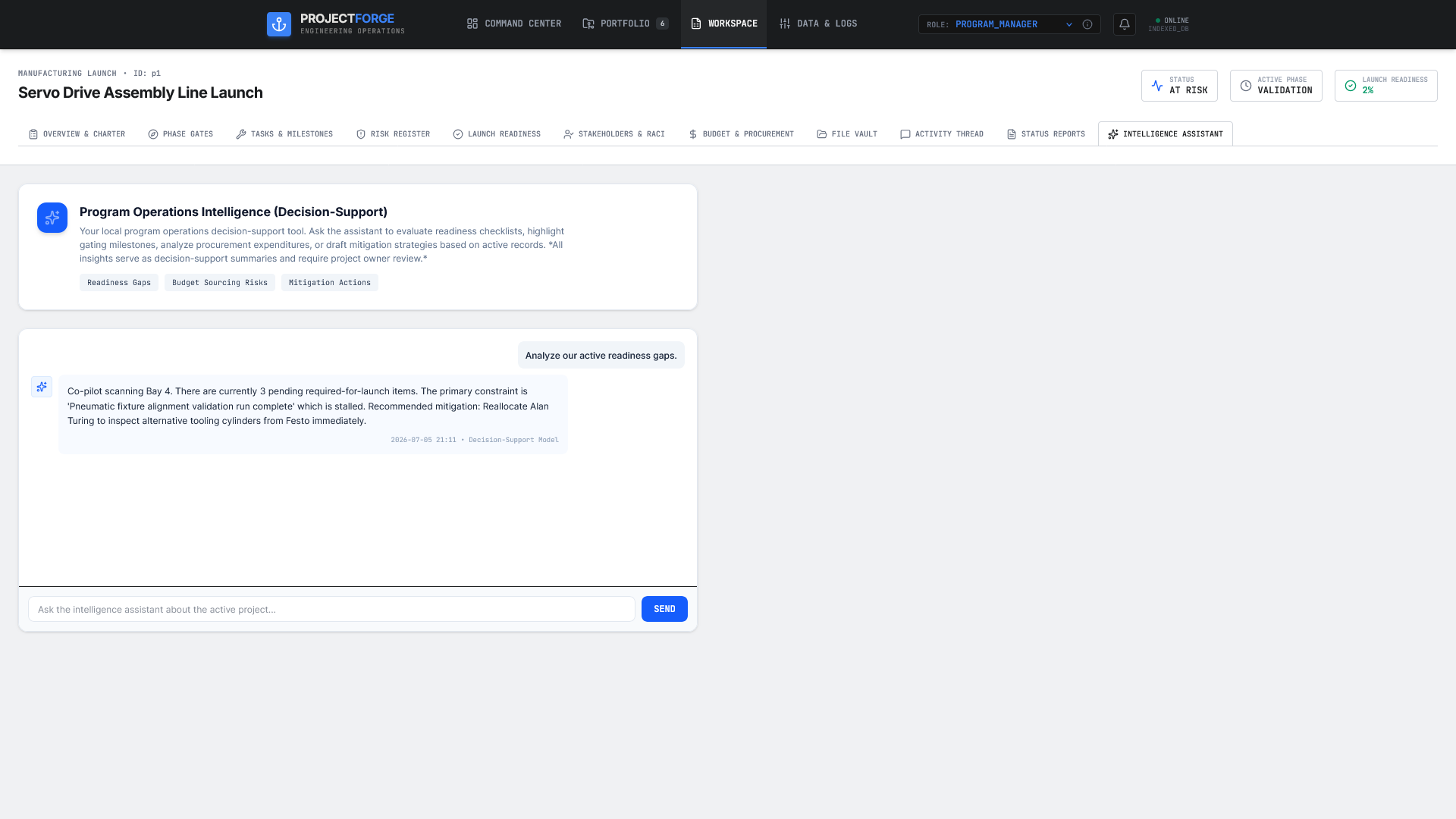
Program Intelligence Assistant
Decision-support assistant concept that summarizes readiness gaps, procurement risk, blocker patterns, and suggested mitigation actions.
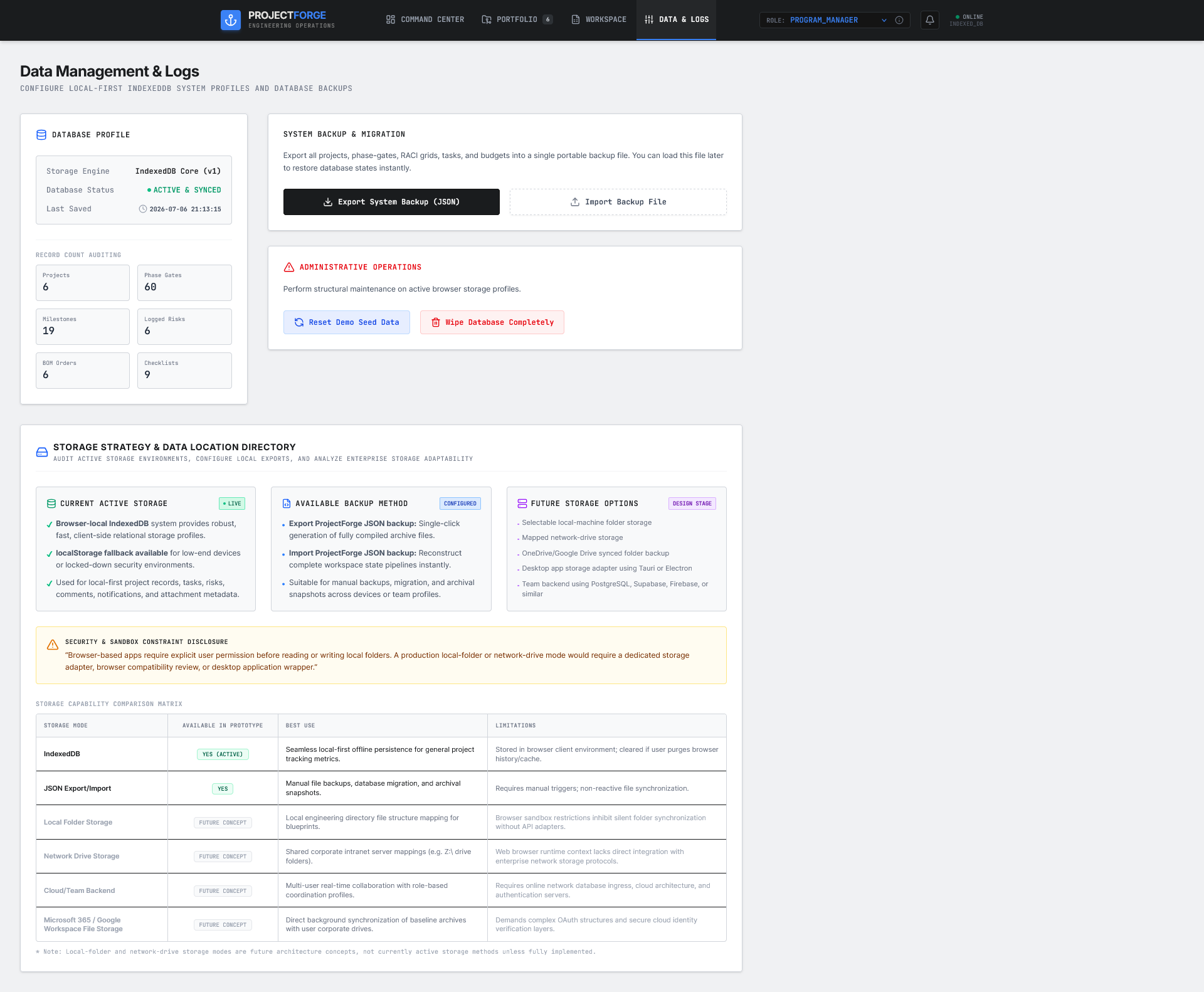
Data Management and Local Persistence
IndexedDB-backed data services with localStorage fallback and JSON import/export for backup, migration, and archival concepts.
Storage Strategy Panel
Prototype view for local-machine folders, mapped network drives, cloud backup concepts, and future team data architecture planning.
Simulated Enterprise Integration Hub
Future-state integration concept for workspace file storage, ERP procurement, QMS systems, shopfloor telemetry, and enterprise directory services.
Screenshot Walkthrough
A polished walkthrough of the ProjectForge experience, emphasizing the operations command center, portfolio workflow, execution controls, readiness planning, and local-first data model.
Executive Portfolio View
Portfolio-level command center showing active programs, at-risk launches, readiness scores, capital allocation, critical launch blockers, upcoming launch windows, operational risk categories, heuristic program intelligence, and simulated enterprise integration readiness.
Program Portfolio and Chartering
Project portfolio and intake charter workflow for filtering active programs, reviewing launch readiness, and creating new engineering or industrial project baselines with owners, budgets, scope, constraints, and target launch dates.
Program Workspace Overview
Project-level workspace showing business objectives, technical scope, success criteria, design constraints, functional ownership, executive sponsor, and target launch details.
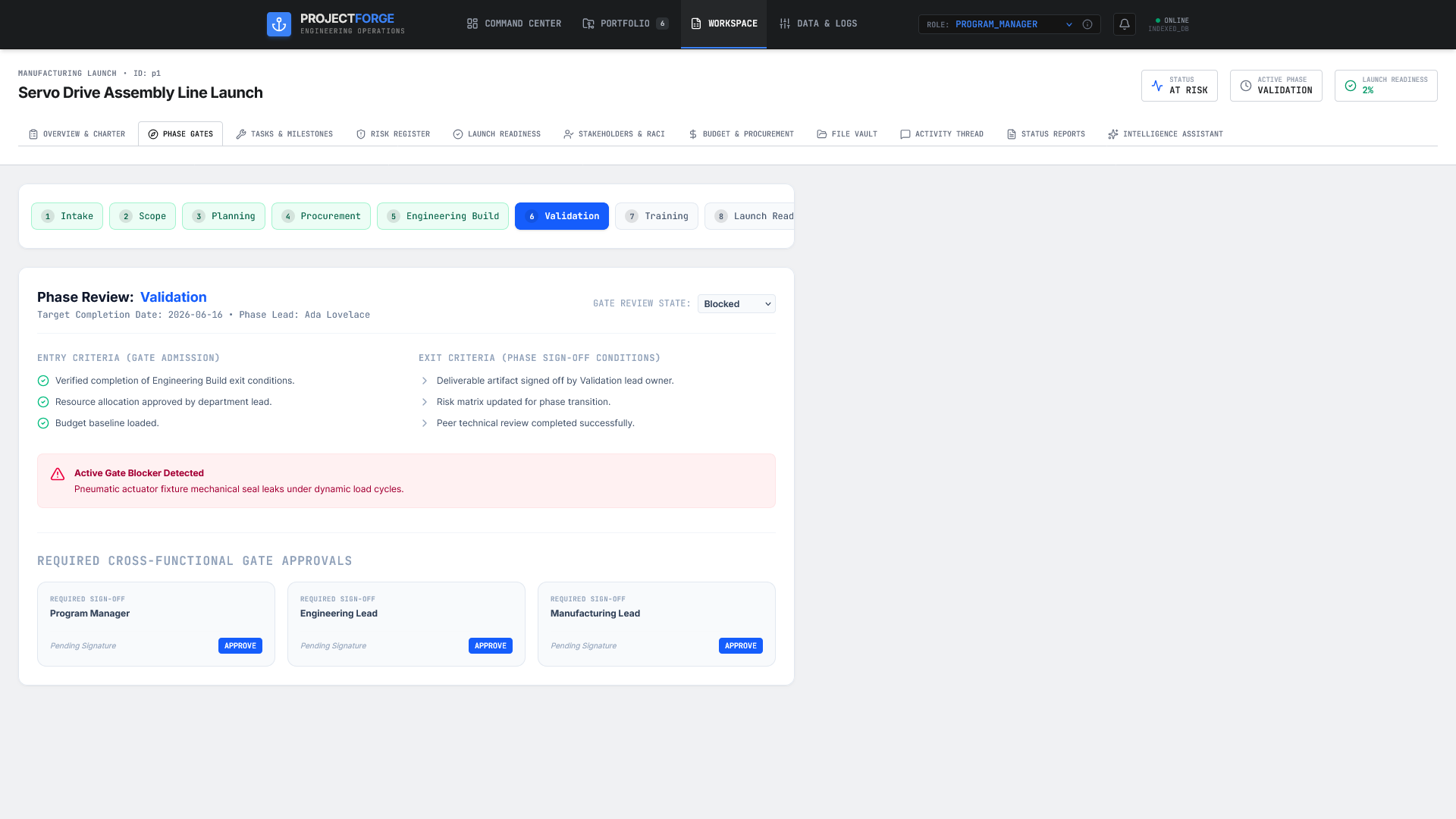
Lifecycle and Phase Controls
Phase-gate tracker showing lifecycle progression, validation criteria, active blockers, required cross-functional approvals, and phase review status.
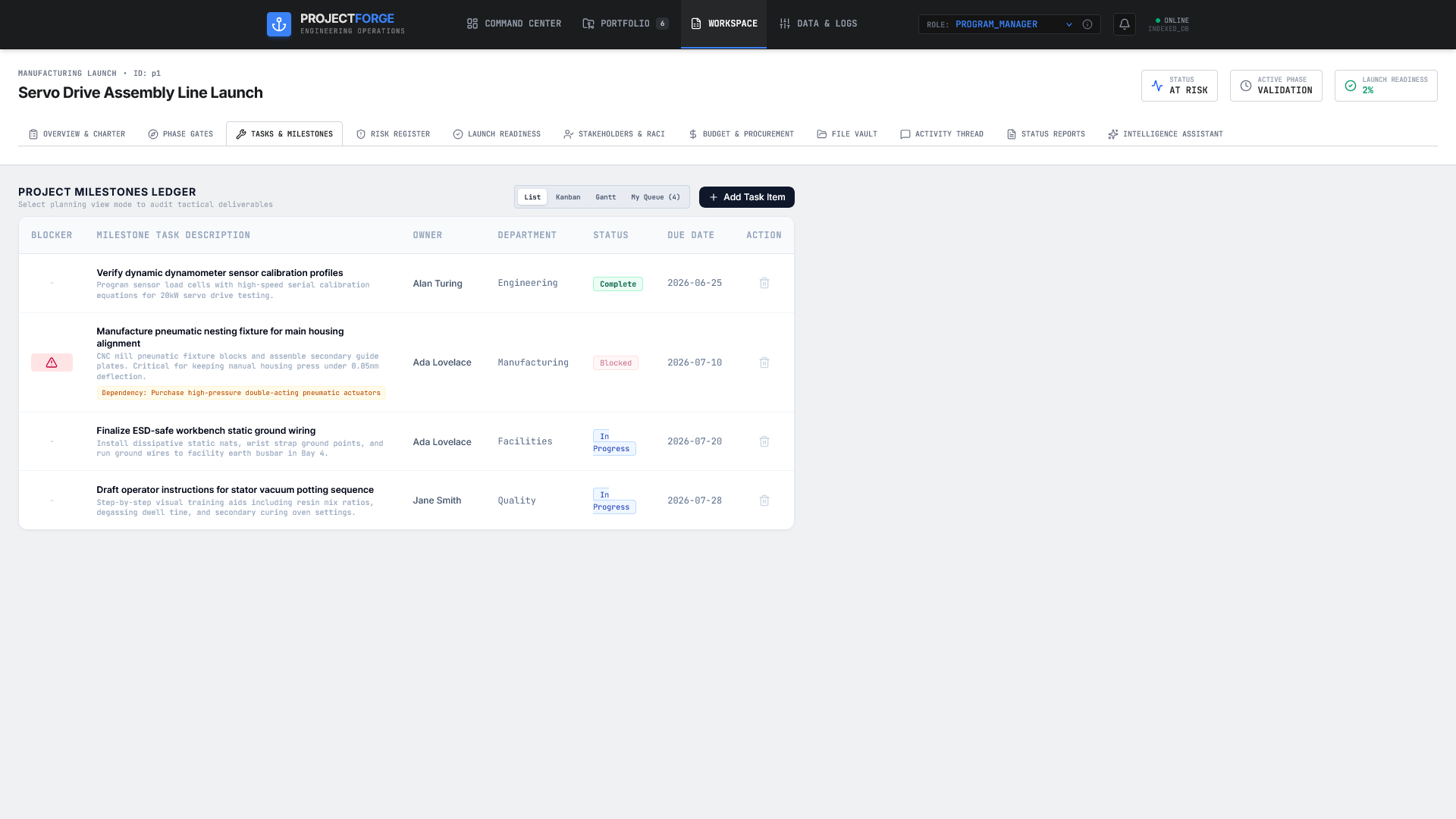
Execution Ledger
Milestone ledger and task management workspace showing owners, departments, due dates, blocker flags, dependencies, and status progression across technical deliverables.
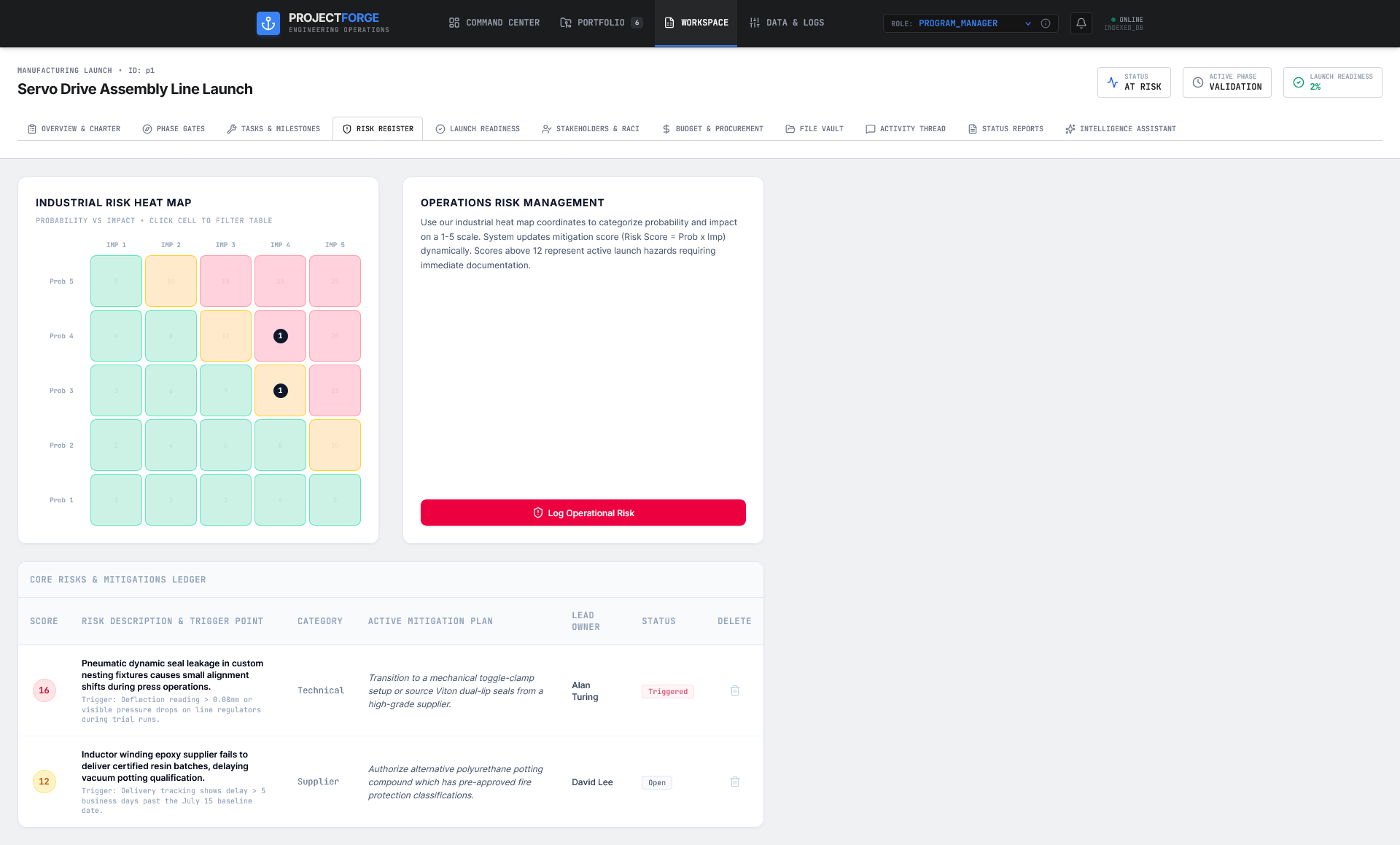
Launch-Critical Risk Visibility
Risk register with probability-impact heat map, mitigation plans, lead owners, trigger conditions, and active risk exposure for launch-critical issues.
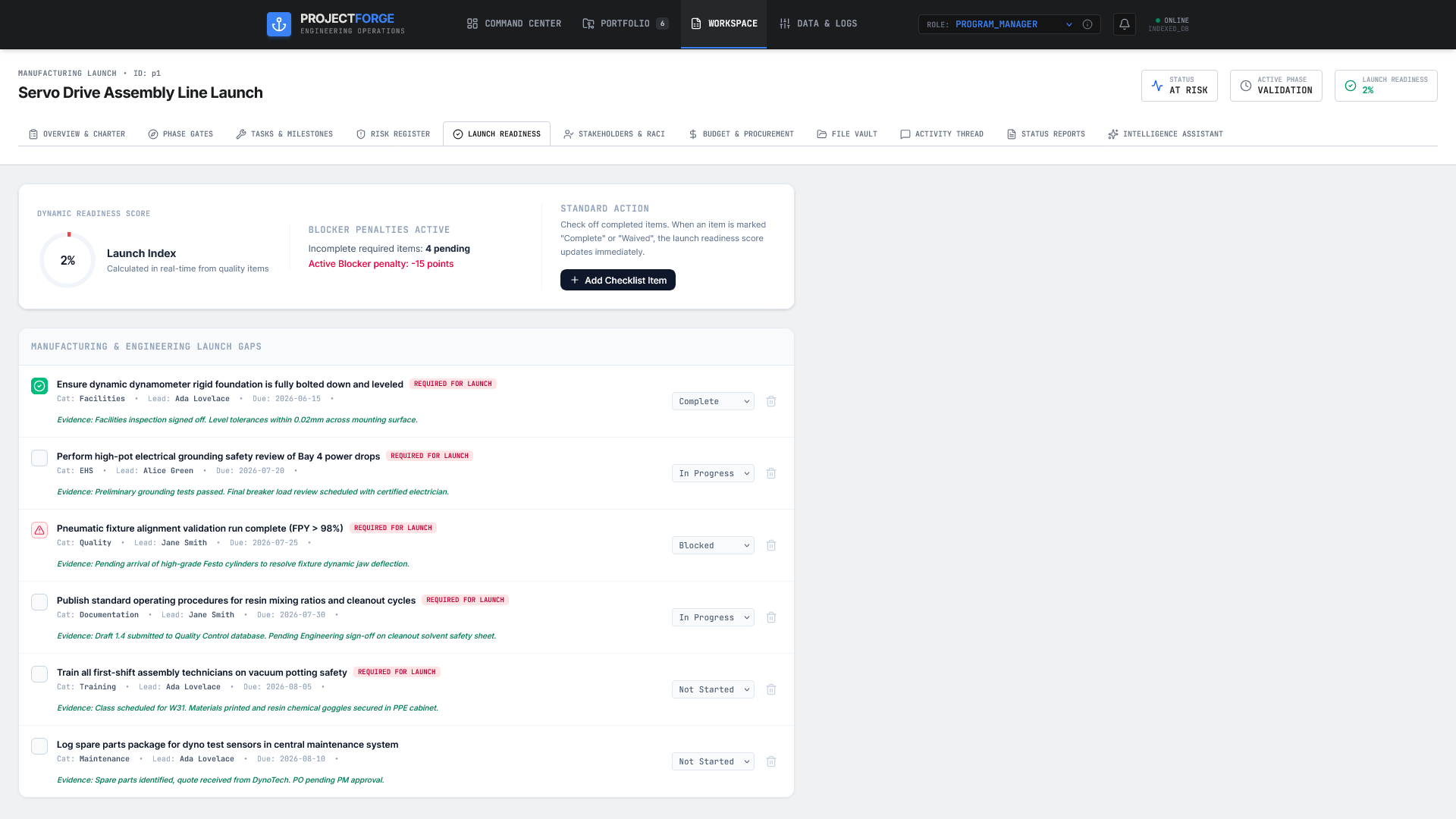
Readiness Planning
Launch readiness checklist calculating readiness score from required-for-launch items, blocker penalties, evidence notes, ownership, due dates, and completion status.
Cross-Functional Ownership
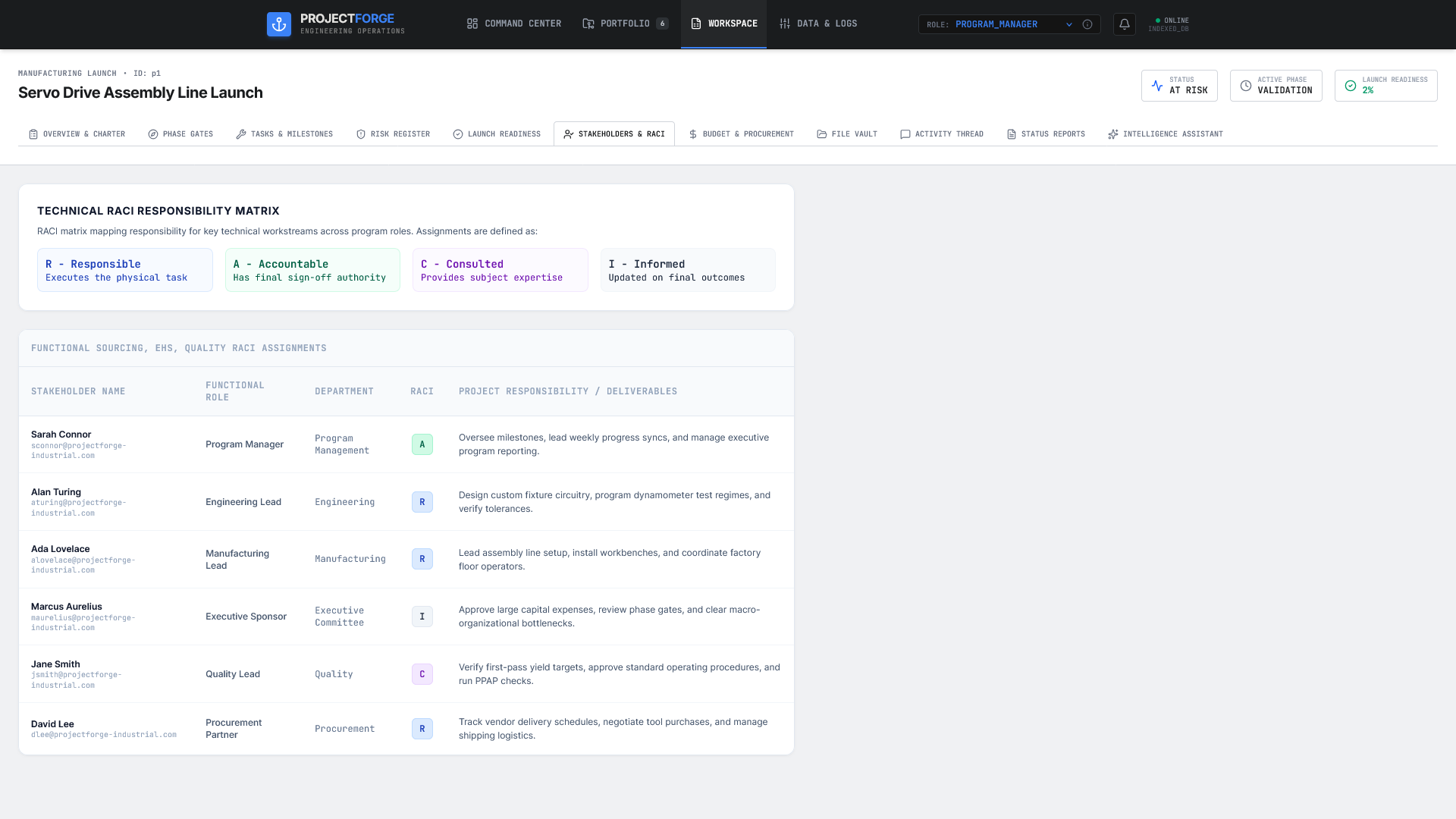
RACI responsibility matrix mapping accountability across program management, engineering, manufacturing, quality, procurement, and executive sponsorship.
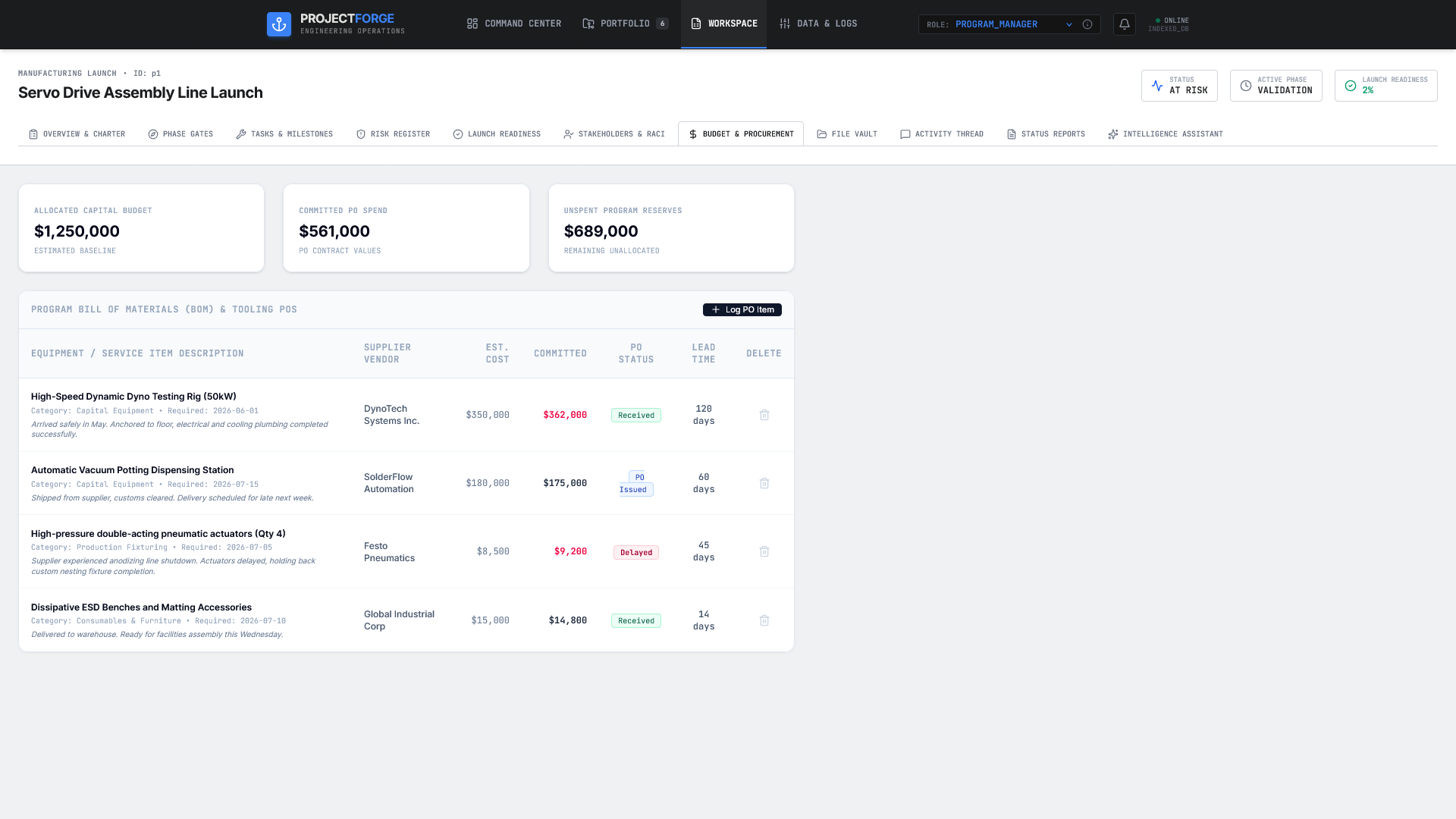
Procurement and Capital Visibility
Budget and procurement summary showing allocated capital, committed PO spend, remaining reserves, long-lead items, supplier status, delivery risk, and purchasing visibility for stakeholders.
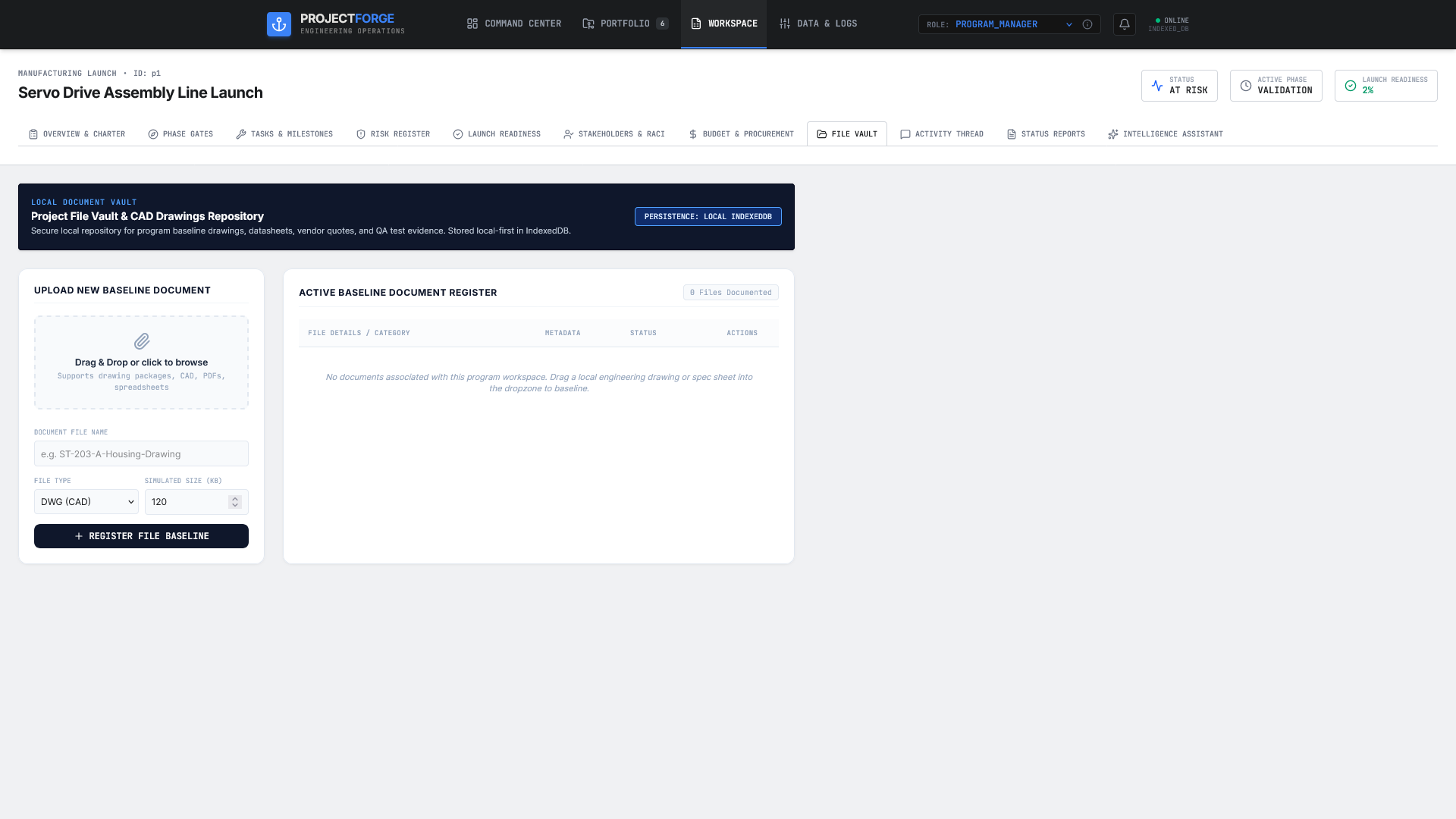
Evidence and Document Control Concepts
Local document vault concept for registering engineering drawings, CAD files, PDFs, spreadsheets, vendor quotes, validation records, and project evidence to the active program workspace.
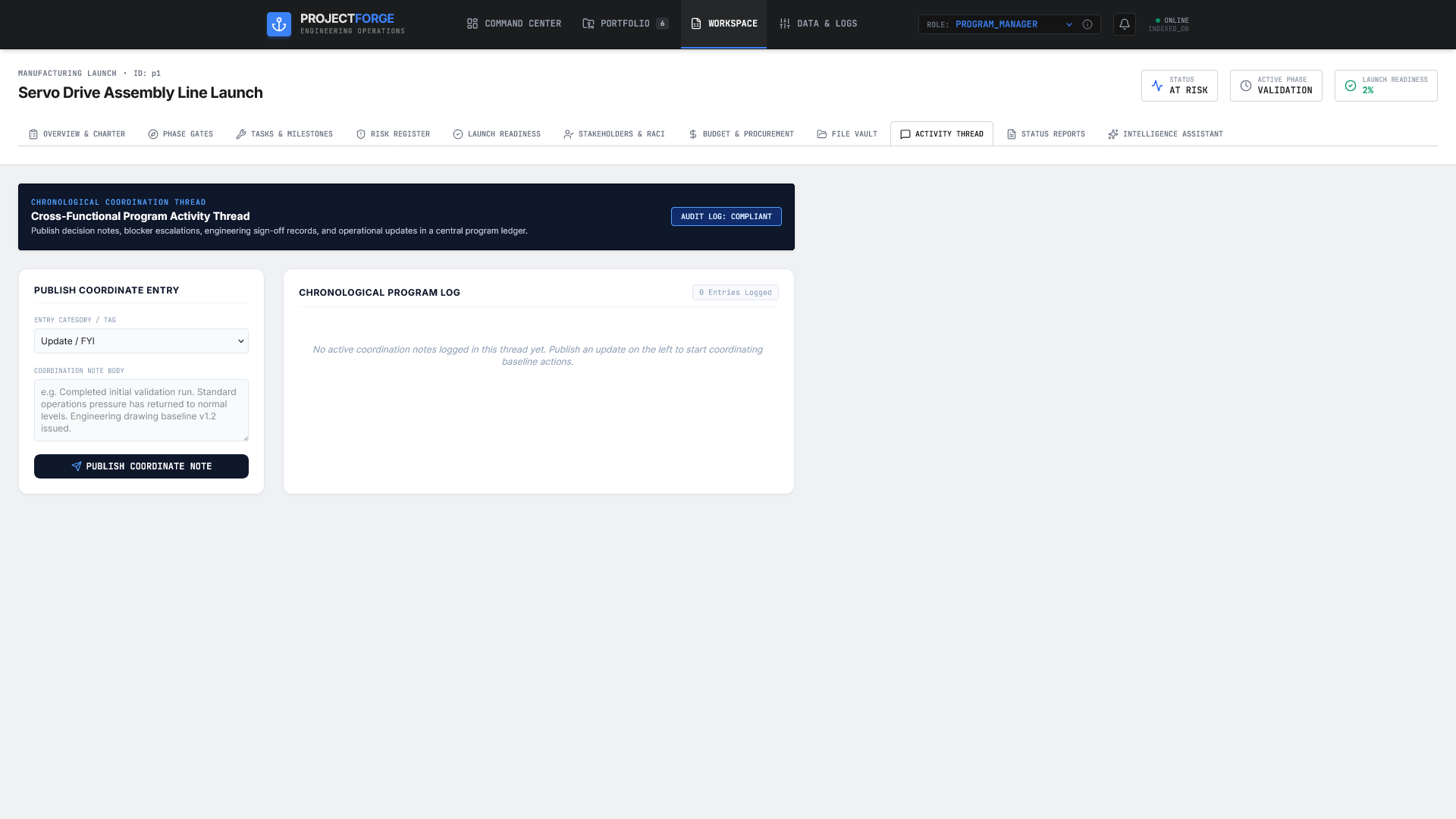
Coordination and Decision History
Simulated collaboration and activity thread for publishing decision notes, blocker escalations, engineering updates, file upload events, quality sign-off notes, and operational coordination records.
Stakeholder Reporting
Executive status report generator compiling project status, launch readiness, blockers, risk exposure, budget notes, accomplishments, and next actions into a stakeholder-ready update.
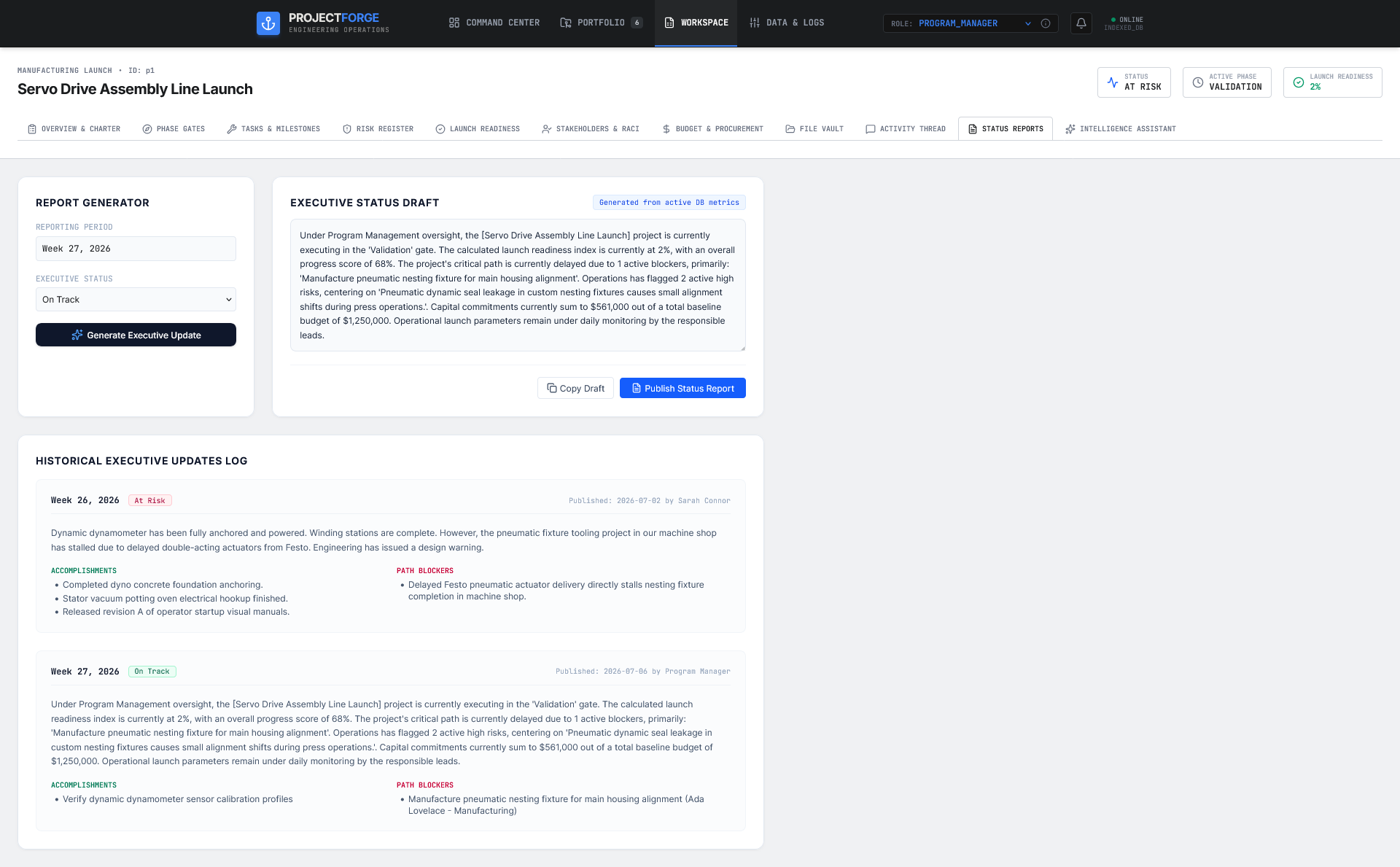
Heuristic Decision Support
Decision-support assistant concept that summarizes readiness gaps, procurement risks, blocker patterns, and suggested mitigation actions for project owner review.
Local-First Data Console
Local-first data management console showing IndexedDB status, JSON backup/import controls, record counts, reset tools, and future storage strategy concepts for local folders, network drives, cloud/team backends, and Microsoft 365 or Google Workspace file storage.
Technical Stack
Local-First Architecture
ProjectForge was designed with browser-local persistence so project records, tasks, risks, readiness items, procurement records, file metadata, activity notes, comments, and configuration data can remain available after refresh.
JSON export and import support backup, migration, and archival snapshots. Future architecture concepts include selectable local-machine folder storage, mapped network-drive storage, OneDrive or Google Drive synced folder backup, a desktop app wrapper using Tauri or Electron, and team backends using PostgreSQL, Supabase, Firebase, or similar services.
Simulated Enterprise Integration Boundary
ProjectForge includes simulated enterprise integration concepts for workspace file storage, enterprise directories, ERP procurement, Quality Management Systems, shopfloor telemetry, Microsoft 365, Google Workspace, office-suite exports, calendar sync, file vault linkage, and notification routing. These are future-state integration concepts only. A production version would require OAuth, API permissions, secure token handling, administrative consent, enterprise security review, and a shared backend or approved file storage architecture.
What This Demonstrates
Technical Program Management
Structuring complex programs around governance, ownership, readiness, and staged execution.
Engineering Operations
Connecting product, manufacturing, and delivery workstreams into one operating model.
Manufacturing Launch Planning
Demonstrating launch readiness logic that ties milestone completion, risk control, and supplier readiness together.
Cross-Functional Leadership
Making stakeholder coordination, ownership clarity, and escalation paths visible.
Stage-Gate Governance
Showing how execution discipline, approvals, and milestone review can be organized for complex initiatives.
Risk and Blocker Management
Supporting a practical approach to issue escalation, mitigation planning, and decision support.
Procurement Visibility
Illustrating how supply chain risk, capital commitments, and lead times can be surfaced to decision makers.
Project Evidence and File Governance
Modeling file registration, document context, and evidence alignment for program execution.
Executive Reporting
Presenting status snapshots that communicate impact, blockers, and recommended next actions.
Practical AI Decision-Support
Using heuristic insights to flag readiness gaps, exposure patterns, and action priorities.